


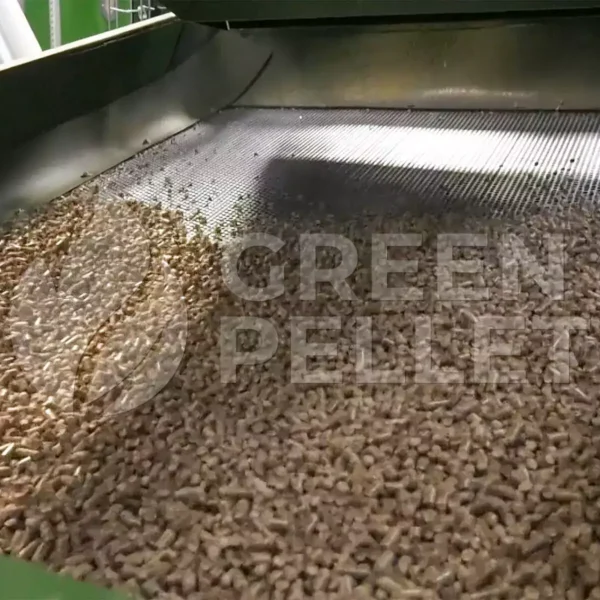
Pellets are a modern and innovative solution in power industryy, which combines high efficiency, environmental friendliness and economic profitability. They are made from renewable biomass resources such as wood waste and agricultural residues, making them one of the most energy-efficient fuels.
Production
The pellet production begins with the collection and preparation of biomass. Raw materials are milled and dried to optimal moisture levels to ensure the quality and efficiency of the final product. Then the raw materials are pressed under high pressure in special presses to form homogeneous granules, i.e. pellets.
Advantages
- Near-to-zero emissions: when burned, pellets release significantly less CO2 emissions compared to traditional fuels such as coal or oil.
- Efficiency: a high calorific value and uniform combustion ensures stable heating of houses and other premises.
- Cost-effectiveness: pellet production helps reduce energy costs, as well as reduces waste from woodworking and agricultural activities, which makes them a cost-effective solution for producers and consumers.
Pellets in everyday life
Pellets are widely used for heating residential buildings, commercial premises and industrial facilities. They are used in special pellet boilers and fireplaces, which provides reliable and efficient heating of premises in any season of the year.
Pellets are a symbol of a modern approach to energy efficiency and sustainable development. Their use contributes to reducing the carbon footprint, preserving forest resources and creating sustainable conditions for future generations. Choosing pellets as an energy source is a step towards a sustainable future, where efficiency and environmental safety go hand in hand.